
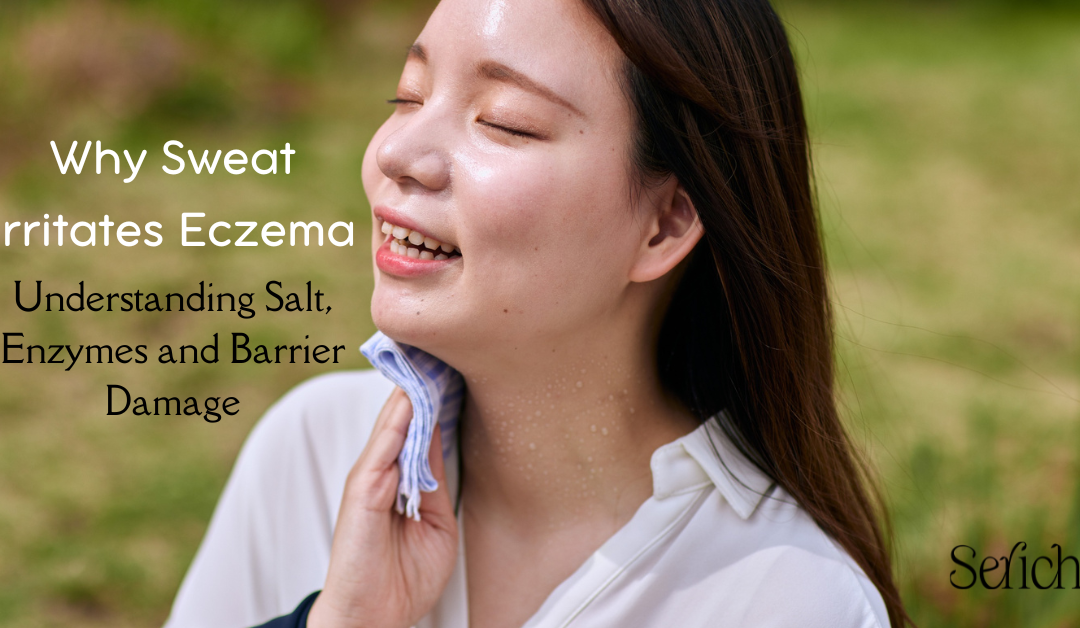
Why Sweat Irritates Eczema: Understanding Salt, Enzymes and Barrier Damage
What makes sweat such a powerful eczema trigger?
Sweat is often seen as harmless, yet for eczema prone skin it can become one of the most consistent sources of irritation. Many individuals notice itching, stinging or patchy redness shortly after sweating, especially in hot and humid climates. Although sweat is a natural and essential cooling mechanism, its composition can overwhelm an already compromised skin barrier. Understanding what happens on the skin when sweat accumulates is the first step to preventing discomfort and maintaining a stronger, calmer barrier.
This is general educational information only and should not be taken as a replacement for personalised medical guidance.
Table of Contents
- How weakened skin barriers react differently to sweat
- Sweat contains salt that disrupts eczema prone skin
- Sweat enzymes can irritate skin with weakened microbiome balance
- Heat and friction amplify sweat related irritation
- How to minimise sweat induced irritation to protect eczema prone skin
- Why barrier strengthening creams help reduce sweat sensitivity
- When sweat triggers flare patterns: when to seek advice
How weakened skin barriers react differently to sweat
Healthy skin is able to tolerate sweat because its barrier is intact and resilient. In eczema prone individuals, the skin barrier is naturally more permeable. This means sweat does not simply evaporate or sit on the surface. Instead, its components seep more deeply into the skin’s upper layers where they come into direct contact with exposed nerve endings and inflamed tissue. This increased permeability is why even a small amount of sweat can trigger intense itching or a burning sensation. Understand the differences between skin barrier and moisture barrier here.
Sweat also increases transepidermal water loss. As the skin heats up, water evaporates faster, further drying an already compromised outer layer. This cycle of dryness, irritation and scratching can worsen barrier impairment over time, creating a feedback loop that makes the skin even more reactive.
Sweat contains salt that disrupts eczema prone skin
One of the most irritating components of sweat is salt. When sweat evaporates, salt becomes more concentrated on the surface of the skin. In people with eczema, the outer barrier is already deficient in ceramides and lipids, making it less capable of buffering this salt exposure.
Salt can draw water out of the skin through osmosis. This dehydration effect leaves the barrier feeling tight and sore. Over time, repeated salt exposure without prompt cleansing or soothing care can make the skin more prone to microcracks and inflammation.
This is why areas like the neck, inner elbows, behind the knees and under the breasts commonly flare after sweating. These are zones where sweat tends to collect and linger. Read here to find out what your skin barrier is made of.
Sweat enzymes can irritate skin with weakened microbiome balance
Sweat contains natural enzymes that help break down sweat glands’ secretions. These enzymes are intended to work only on the surface. On healthy skin they do not cause harm. However, in eczema prone skin where the microbiome is often disrupted and the barrier is thinner, these enzymes can penetrate more easily.
When these enzymes enter deeper layers, they interact with sensitive tissues, triggering stinging and inflammation. This effect is more noticeable in humid environments such as Singapore where sweat remains on the skin for longer periods. Read here to find out why your skin struggles in Singapore’s humid heat.
A weakened microbial balance also makes the skin more vulnerable. When sweat accumulates, it changes the skin’s pH temporarily, making it less acidic. This shift may encourage opportunistic bacteria to multiply. For eczema prone skin, these microbial shifts can aggravate symptoms or increase the likelihood of developing flare patterns over time.
Heat and friction amplify sweat related irritation
Sweat rarely irritates the skin alone. Heat and friction often make it worse. Clothing rubbing against sweat soaked skin creates more mechanical stress. This can lead to chafing in delicate zones such as the inner thighs, neck folds and elbow creases.
For people with eczema, friction disrupts the barrier even further. The combination of moisture, heat and movement softens the outer skin layer temporarily, making it easier to damage. This state, known as overhydration, allows irritants to enter more rapidly.
This is why exercise, outdoor activities and prolonged sun exposure commonly lead to itching. It is not only the sweat itself but the environmental conditions surrounding it.
How to minimise sweat induced irritation to protect eczema prone skin
Effective sweat management is one of the most practical ways to reduce eczema related sensitivity. The goal is not to stop sweating, which is impossible and unhealthy, but to prevent sweat from remaining on the skin for too long.
Wearing breathable fabrics reduces heat buildup and encourages sweat to evaporate. Cotton and bamboo fibres are comfortable options for sensitive skin. During exercise, using a soft towel to gently pat (not rub) sweat away helps limit lingering salt and enzymes.
Taking a quick rinse after sweating is one of the simplest and most beneficial habits. Even a short shower with lukewarm water helps remove sweat residue without stripping the skin. Avoid hot water, as it intensifies dryness and increases barrier stress.
After rinsing, apply a barrier supportive moisturiser while the skin is still slightly damp. This helps replenish lost lipids and strengthens the outer layer.
Why barrier strengthening creams help reduce sweat sensitivity
Moisturisers that mimic the skin’s natural barrier help reduce sensitivity to sweat over time. Formulas containing ceramides, cholesterol, phytosphingosine and fatty acids support the skin’s lipid matrix. These components strengthen the barrier so that sweat is less able to penetrate deeply.
Ingredients like saccharide isomerate, hyaluronic acid and glycerin help maintain hydration even when exposed to heat. Botanical extracts that support skin resilience, such as centella asiatica and astragalus, provide additional calming benefits. Read here to find out why your skin needs postbiotics.
SERICH Barrier Support Cream is an example of a microbiome aligned formula designed for sensitive and eczema prone skin. It includes ceramides, lactobacillus ferment and barrier supportive lipids that help improve resilience against sweat induced irritation. With regular use, these formulations help rebuild a stronger, more stable barrier so that everyday heat and humidity become less challenging.
When sweat triggers flare patterns: when to seek advice
Occasional sweat irritation is normal, but persistent symptoms may signal the need for targeted care. If sweat regularly causes redness, welts, burning or prolonged itching, it may be helpful to seek guidance from a dermatologist. They can help determine whether your flare pattern is due to sweat, friction or a combination of both.
You may wish to learn more about SERICH Moisturising Cream, developed to support the skin barrier with science led formulation. It is fragrance free, steroid free, cruelty free, vegan, approved by PETA, EWG Verified and made in Singapore.

FAQ Eczema and Moisturising Cream: How to Choose the Right One for Barrier Repair
What is the best moisturising cream for eczema? Learn how moisturisers support the skin barrier, reduce itching and improve eczema comfort with science-led guidance.

Steroid-Free Skincare for Eczema: What to Look for and Why It Matters
Learn why steroid-free skincare matters for eczema-prone skin and what to look for in a safe, effective daily moisturiser. A guide for long-term skin health.

Skin Microbiome and Eczema: How Good Bacteria Help Calm Sensitive Skin
Learn how your skin microbiome affects eczema-prone skin and why post-biotics are essential for calming sensitivity and supporting healthier skin long-term.

CNA938 Rewind – The Wellness Hour – The Science Behind Steroid-free Eczema Relief
Eczema can be difficult to manage over the long term, especially for people with sensitive or eczema-prone skin who want relief and steroid-free. Listen to podcast by CNA938.

Skin Barrier Repair for Eczema-Prone Skin: Why Ceramides and Post-Biotics Matter
Discover how ceramides and post-biotics support skin barrier repair for eczema-prone skin. Learn why steroid-free skincare matters for long-term skin health.

Eczema and Hormonal Changes: What Happens During Stress, Cycles and Ageing
Hormonal changes can worsen eczema during stress, menstrual cycles, pregnancy and ageing. Learn how hormones affect the skin barrier and what eczema-prone skin needs.


